
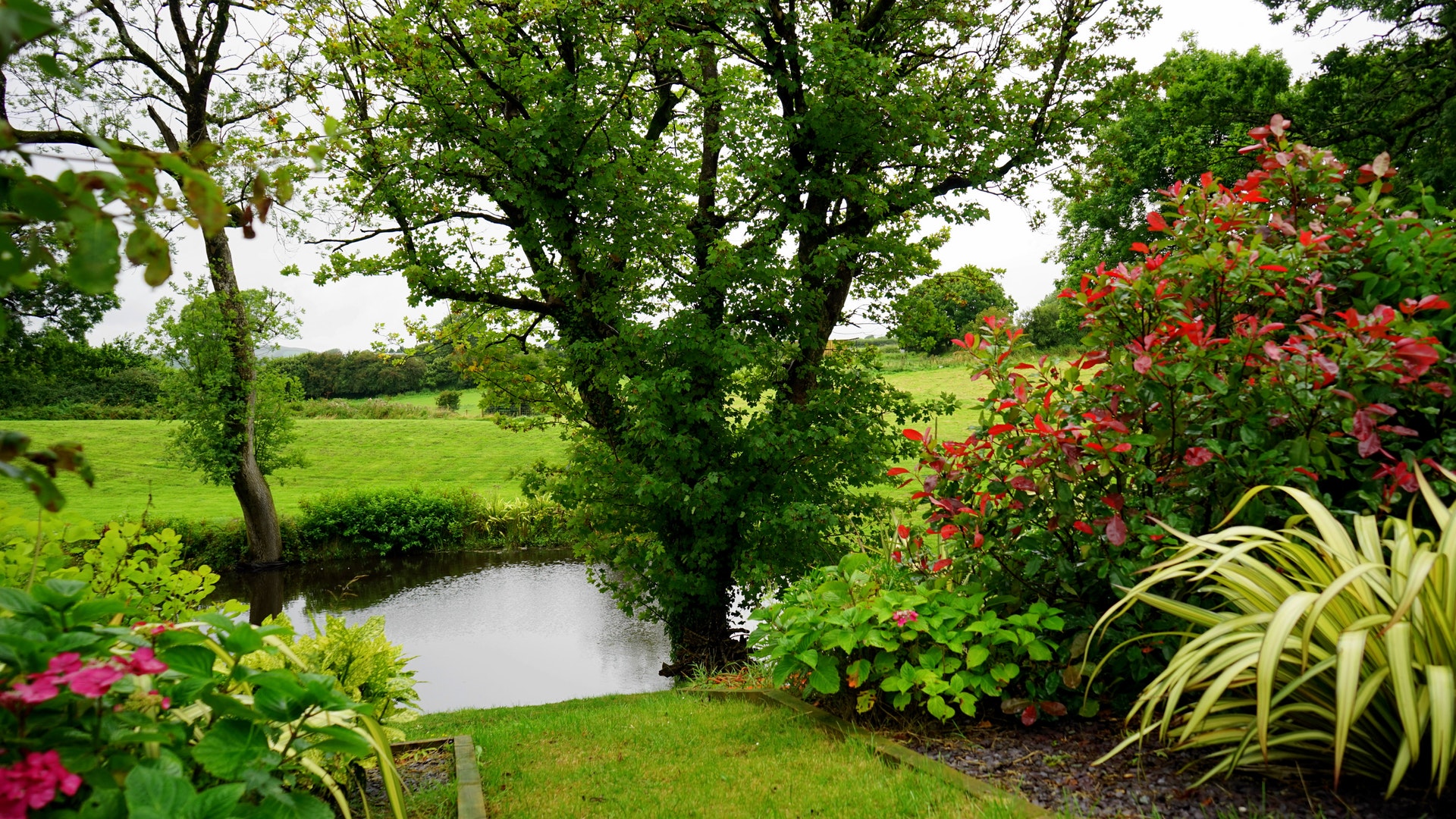
A lower-maintenance landscape is not a landscape without care. It is a property where plant choices, water needs, access and seasonal tasks were considered before installation.
Design around the site
Map sun, wind, drainage, views and foot traffic before choosing plants. A dry, sunny corner needs a different plan than a shaded foundation bed. The right plant in the right place needs less correction later and is more likely to develop a healthy natural form.
Create maintenance zones
Place plants with similar water, sunlight and pruning needs together. Clear zones make irrigation more efficient and let routine work happen without treating every corner of the property the same way. Keep utility panels, gates, cleanouts and equipment routes accessible.
Choose plants for mature size
A shrub that looks small at installation can quickly cover windows, crowd a walkway or block equipment access. Check mature height and width before planting. Giving every plant appropriate space reduces constant shearing, lowers competition and prevents expensive removal later.
Use structure before seasonal color
Trees, shrubs, ornamental grasses, paths and defined bed lines create the year-round framework. Flowers and containers can add color without carrying the entire design. A strong structure keeps the landscape intentional even when few plants are blooming.
Build clear bed edges
A defined edge keeps turf and mulch where they belong, improves curb appeal and makes mowing faster. Healthy groundcover, suitable spacing and consistent mulch leave fewer openings for weeds. Remove problem growth before adding fresh mulch and avoid piling material against trunks or plant crowns.
Protect the soil
A suitable mulch layer moderates soil temperature and slows moisture loss. It should support the root zone, not bury it. Over time, check whether old material has broken down or accumulated too deeply instead of automatically adding another heavy layer every season.
Plan hardscape and utilities first
Drainage, irrigation, paths, patios, fences and major trees should be considered before finishing planting beds. Installing those elements later may disturb completed work. Even when construction happens in phases, a complete direction protects each investment and keeps improvements connected.
Repeat a dependable plant palette
Using successful plants in repeated groups creates a cleaner design and makes watering, pruning and replacement more predictable. Repetition also helps a large property feel intentional without requiring a different maintenance routine for every bed.
Lower-maintenance landscape checklist
- Map sun, wind, drainage, views and traffic patterns.
- Choose plants suited to the site and their mature size.
- Group plants with similar water and maintenance needs.
- Build clear bed edges and protect soil with proper mulch.
- Install drainage, irrigation and hardscape before finishing beds.
- Plan how the landscape will be maintained in every season.
Start with a complete plan
CPS can organize planting, irrigation, turf, patios, fences, walkways and lighting into one practical direction. The work can still happen in stages, but each stage will support the final property rather than competing with it.